ATHLETE RESOURCES
Professional Disclaimer
The information and resources provided on this page are intended for educational purposes only. They are general in nature and do not constitute individualised assessment, exercise prescription, or medical advice.
Athletes should not apply these resources verbatim without consideration of their own circumstances. Training and exercise decisions should be made in consultation with a qualified professional, such as an Accredited Exercise Physiologist, physiotherapist, or appropriately qualified coach, who can assess individual needs and risk factors.
Over many years working in sport—as a sport-specific coach, strength and conditioning coach, and Accredited Exercise Physiologist—I have developed a range of practical tools and resources to support athlete and coach education.
These resources are shared to improve understanding, encourage informed decision-making, and support long-term athletic development. They draw on both high-performance coaching practice and clinical exercise physiology principles.
If you would like to discuss any of these resources please reach out.
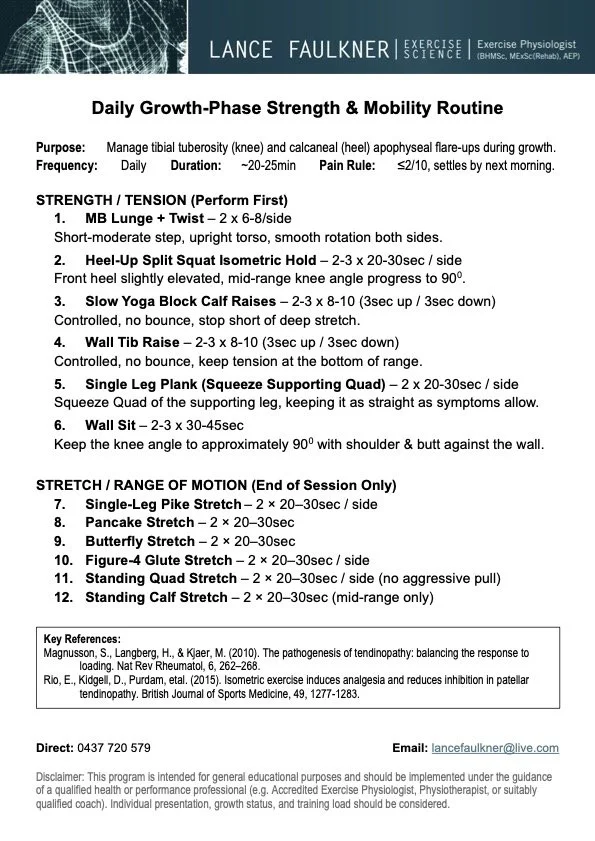
Growth Phase Strength and Mobility Routine
During periods of rapid growth, highly active young athletes may experience discomfort in common areas such as the knees and heels. These symptoms are often associated with increased tissue loading alongside temporary reductions in mobility and coordination.
This routine has been developed to support connective tissue health by encouraging collagen synthesis through appropriately selected strength work, while also improving mobility to help reduce residual tension across vulnerable areas during growth phases.
For best results, this routine can be performed daily, provided symptoms feel improved following completion. Exercises should remain comfortable and controlled, with load and range of motion adjusted to the individual athlete’s stage of growth, training demands, and current symptoms.
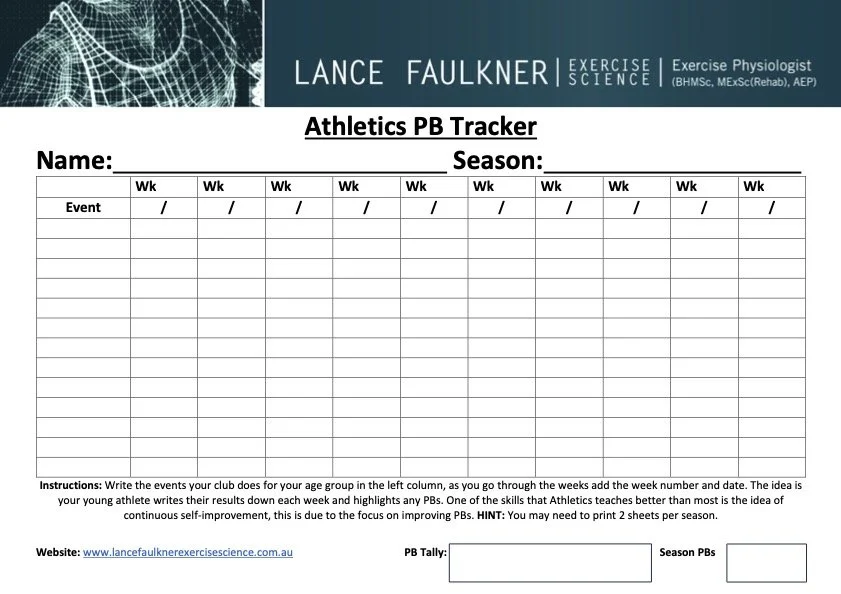
Athletics PB Tracker
Athletics is one of the best sports for teaching young athletes how to measure progress, set goals and take ownership of their improvement. This simple PB Tracker gives athletes and families a practical way to record weekly results, highlight new personal bests and keep track of progress across the season.
Write your age-group events down the left-hand side, add results each week, and use the tracker as a season-long snapshot of effort, consistency and improvement. You may need to print two copies to cover a full Athletics season.
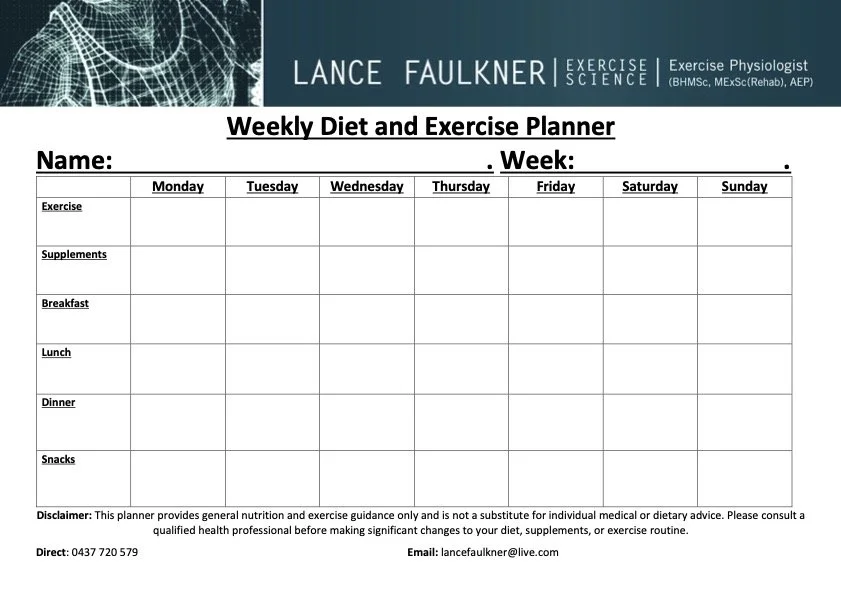
Nutrition & Athletic Performance
Nutrition plays an important role in athletic performance, recovery, and long-term health. The food and fluids an athlete consumes provide the energy required to train, compete, concentrate, adapt, and recover. Consistent nutrition habits support training quality, immune function, growth and development, and the body’s ability to handle the physical demands of sport.
This resource is intended to help athletes and families improve understanding, encourage informed decision-making, and develop sensible habits that support long-term athletic development. Nutrition does not need to be perfect, but it should be planned, consistent, and appropriate to the individual athlete’s needs, training load, and stage of development.
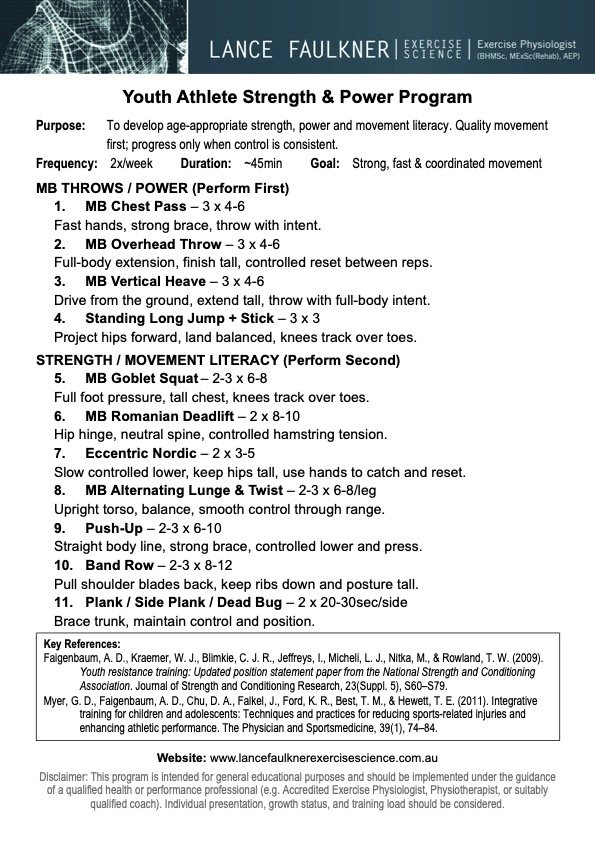
Youth Athlete Strength & Power Program
This resource is an educational example of how a youth strength and power session can be structured to develop movement literacy, coordination, strength and explosive intent. It is not designed to be copied and blindly used with every athlete. Exercise selection, volume, intensity, recovery and progression should always be adjusted to suit the athlete’s age, training experience, growth status, technical ability, sport demands and current training load.
The same session structure can be applied in different ways to achieve a different adaptation. It may be delivered as a traditional strength and power session, organised as a circuit, used as part of a small-group training block, or split into two shorter sessions across the week. For example, the medicine ball throws and jumps could be completed as a short power-focused session, while the strength and trunk-control exercises could be completed separately.
The key message is simple: quality movement first, progression second. Young athletes should move well, stay controlled, and only progress when they can consistently demonstrate safe and effective technique.